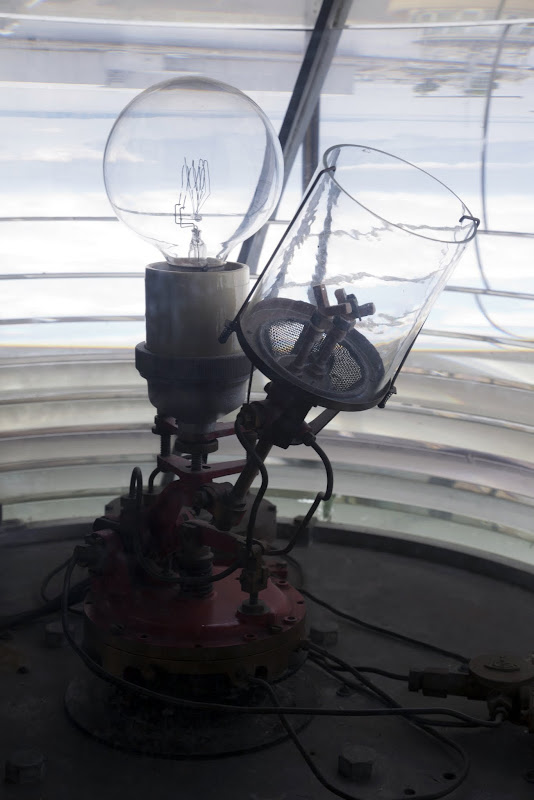
Olen aina rakastanut majakoita. Miksen siis kuvaisi niitä? * I´ve always loved lighthouses. So, why shouldn´t I take photos of them?


© Mari Hirsikallio

Tmi Kameravene Mari Hirsikallio
mari.hirsikallio(at)kymp.net
p. 040 581 7592

- Mikäli kuvat kiinnostavat, ota yhteyttä! Kuvien käyttö ilman lupaani kielletty.
- If you want my photos, please contact! You are not allowed to use my photos without my permission.

30.10.2013

Lesnoy, Venäjä / Russia (Kaliningradin alue / Kalinigrad district)

Koordinaatit: 55 ° 01,0 'N / 20 ° 36,8' E. Kansainvälinen rekisteröintinumero: C 3270 Valo ja kantavuus: valkoinen 17 nm. Tornin korkeus: 40 m. Korkeus merenpinnasta: 44 m


Coordinates: 55 ° 01.0 'N / 20 ° 36.8' E International Registration Number: C 3270 Light and capacity: white 17 nm Tower height: 40 m Height above sea level: 44 m

23.10.2013

Gdańsk Nowy Port, Puola / Poland

Yksi kauneimmista majakoista Pohjois-Euroopassa (maantieteellinen sijainti 54 ° 24'28'' N, 18 ° 39'50'' E), tämä 90 jalkaa pitkä rakenne on rakennettu vuonna 1893 ja otettu käyttöön vuonna 1984. Se oli myös ensimmäinen majakka Itämerellä, joka käytti sähköä.

Majakka sijaitsee Gdańskin sataman suulla, Nowy Port majakka yhdistää kolme erillistä osaa: se on majakka, lentäjien torni ja aikapallo. Kuten Greenwichissä, Englannissa, majakassa on aikaa mittaava pallo, mitataan 5 metriä halkaisijaltaan ja painoa 150 kiloa. Pallo laskee joka päivä aikaa ja antaa tarkkaa aikasignaalia aluksille Gdańskinlahdella.

Gdańsk Nowy Port majakasta tuli kuuluisa maailman historiassa 1. syyskuuta 1939, jolloin siitä klo 04:45 tuona päivänä Saksan armeija avasi tulen Puolan armeijan etuvartioon Westerplatten vastakkaisella puolella jokea. Tästä alkoi toinen maailmansota, sota, joka vaati 55 miljoonaa henkeä. Kolme minuuttia myöhemmin, klo 04:48 Saksan taistelulaiva Schleswig-Holstein aloitti pommitukset Westerplatteniin.

Vuonna 1984, kun uusi, moderni majakka rakennettiin pohjoisessa sijaitsevaan Gdańskin satamaan, Gdańskin Nowy Port poistettiin käytöstä, siitä tuli hylätty ja unohdettu. Vasta vuonna 2001 se peruskorjattiin ja avattiin yleisölle vuonna 2004. Lisäksi vuonna 2008 majakan aikapallo kunnostettiin, ja nyt laskee aikaa, kellon tarkkuus 1 sekunnin virhe 200 000 vuodessa!

Gdańsk Nowy Port majakka, Grand Old Dame Gdańsk on usein kuvattu, kaunein, mielenkiintoisin ja parhaiten säilynyt majakka Puolan rannikolla. Tämä historiallinen monumentti myös tarjoaa kävijöilleen mahdollisuuden ihailla sen ainutlaatuista arkkitehtuuria ja vertaansa vailla olevia näkymiä Gdańskin satamaan, Westerplattenille, ja koko Gdańskinlahdelle, kuten Helin niemimaalle.


One of the most beautiful lighthouses of Northern Europe (geographical position 54°24'28''N, 18°39'50''E), this 90-feet-tall structure was built in 1893 and put in service in 1984 and, according to a legend, it was a twin of the most beautiful lighthouse of America - the lost Main Lighthouse of Cleveland, Ohio. It was also the first lighthouse on the Baltic Sea to use electricity. Situated at the entrance of the harbor of Gdańsk, the Nowy Port lighthouse combined three distinct functions: that of a coastal lighthouse, a harbor pilots tower, and a time ball station. Like in Greenwich, England, the time ball, which measured 5 feet in diameter and weighed 150 pounds, dropped every day at noon to give a precise time signal to the captains of the ships lying at anchor in the Bay of Gdańsk, to allow them to adjust their chronometers, which in turn allowed them later to establish their ship's position (more precisely the longitude) on the open sea. The Gdańsk Nowy Port Lighthouse entered world history on September 1, 1939, when from its embrasures at 4:45 a.m. of that day the German army opened fire on the Polish military outpost of Westerplatte on the oposite side of the river, thus starting World War II, a war which claimed 55 million lives. Three minutes later, at 4:48 a.m. the German battleship Schleswig-Holstein began shelling Westerplatte in its turn. In 1984, when a new, modern lighthouse was built in the Northern Port of Gdańsk, the lighthouse of Gdansk Nowy Port was decommissioned, abandoned and forgotten. It was only in 2001 that a Canadian with roots in Gdańsk acquired it from the Polish government and after extensive renovation and conservation work opened it to the public in 2004 as a museum. Inside the historic monument one can admire old optical and electrical instruments from the era long gone by, as well as a superb exhibition of the most beautiful lighthouses of the world. In addition, in 2008 the lighthouse's time ball was restored, and now drops every day at 12 o'clock noon and then at 2, 4 and 6 pm, with the accuracy of 1 second cumulative error in 200 000 years! The Gdańsk Nowy Port Lighthouse, the Grand Old Dame of Gdańsk, is often described as the most beautiful, most interesting, and the best kept lighthouse of the Polish coast. This historic monument also offers its visitors a chance to admire its unique architecture and an unsurpassed view of the Gdańsk Harbor, Westerplatte, and the whole Bay of Gdańsk, including the Hel Peninsula.


16.10.2013

Krynica Morska, Puola / Poland

Tämä majakka sijaitsee Krynica Morskassa, Pomeranian voivodikunnassa, Puolassa.
Alkuperäinen majakka, joka on rakennettu vuonna 1895, tuhoutui 1945. Uusi majakka, nyt avoinna vierailijoille, on rakennettu vuonna 1951. Vieressä on pieni hautausmaa, jossa on muistomerkki neuvostoliittolaisille sotilaille, jotka kuolivat räjähdyksessä, joka tuhosi alkuperäisen rakennuksen.
Avattu täysin yleisölle, tästä majakasta on kauniit näkymät Itämerelle ja Veikselin lahteen.

Rakentaminen alkoi kesäkuussa 1894. Majakka kuitenkin räjäytettiin vuonna 1945. Uusi majakka rakennettiin vasta 1950-luvun alussa. Se aloitti toimintansa kesällä 1951. Se oli rakennettu betonielementeistä ja on muodoltaan kartio. Tornin korkeus on 26,5m ja valo on asennettu 53m merenpinnan yläpuolelle. Valon kantama on 18 merimailia. Majakka peruskorjattiin vuonna 1996. Koko torni punainen - kirkkaana päivänä se voidaan nähdä useita meripeninkulman päässä. 


This lighthouse is located in Krynica Morska, Pomeranian Voivodship, Poland.
The original lighthouse, built in 1895, was destroyed in 1945 after being mined by retreating German forces. A new lighthouse, now open to visitors, was built in 1951. Adjacent to it is a small cemetery with a monument to the Soviet soldiers killed in the explosion that destroyed the original building.

Opened completely to the public, this lighthouse has beautiful views over the Baltic Sea and the Vistula Lagoon.

Construction of the lighthouse here began in June 1894. The structure was however blown up in 1945 by the retreating German soldiers. A new lighthouse was built only at the beginning of the 1950’s in accordance with a design supplied by the Gdansk Polytechnic. It began operating in the summer of 1951. It was built from concrete blocks and has the shape of a truncated cone with an internal staircase climbing to the top. The light system is made up of a two-position changer with 1000 watt bulbs and a cylindrical Fresnel lens. The angle of the beam covers the full rotation so the lighthouse is visible from the sea as well as from the Vistula Lagoon. The height of the tower is 26.5m (a round red tower with an observation gallery) and the light is mounted 53m above sea level with a range of 18 nautical miles. A major refurbishment of the lighthouse was carried out in 1996. The whole tower was then painted red – on a clear day it can be seen from several nautical miles away. The observation gallery has views of the open sea and the Vistula Lagoon, from the land side Tolmicko and Frombork and with good visibility even the lights of the Hel Peninsula and Gdansk.


9.10.2013

Hel, Puola / Poland

Majakka perustettu 1942 (moderni asema perustettu 1827). Aktiivinen; valon korkeus 41 m, valkoinen valo, 5 s, 5 s pois. 40 m korkea kahdeksankulmainen torni lyhty ja galleria, maalattu punaiseksi. Majakka räjäytettiin Puolan joukkojen toimesta syyskuussa 1939 toisen maailmansodan alussa. Majakka sijaitsee tien 216 lopussa, noin 72 km kaakkoon Władysławowosta.


Lighthouse 1942 (modern station established 1827). Active; focal plane 41 m; white light, 5 s on, 5 s off. 40 m octagonal tower with lantern and gallery, painted red. This lighthouse marks the end of the Hel peninsula (Mierzeja Helska), a crucial point of reference for ships entering the Gulf of Gdańsk (Zatoka Gdańska). Lights were displayed in this area in the 17th century, including lights in a church tower as early as the 16th century. Lighthouses were buolt nearby in 1670 and 1790. Lighthouse was blown up by Polish forces in September 1939, at the start of World War II. In 1989 the tower was equipped with a radar antenna atop the lantern, and now the gallery is crowded with communications equipment. Located at the end of highway 216, about 72 km southeast of Władysławowo.


2.10.2013

Sopot, Puola / Poland

Majakka perustettu 1957 (torni rakennettiin 1904). Aktiivinen; valon korkeus 25 m; valkoinen valo joka 4. sekunti.

Majakka on n. 33 m korkea neliö, muurattu torni, jossa on pyramidin muotoinen kattoosa. Valo on pieni rumpu-muotoinen lyhty, joka on liitetty tornin ulkopuolelle. Torni rakennettiin osana suurta kylpylää, joka oli hyvin suosittu jo 20-luvulla. Valo on asennettu torni vuonna 1957, vuonna 1978 se korvattiin nykyisellä lyhdyllä.


Lighthouse 1957 (tower built 1904). Active; focal plane 25 m; white flash every 4 s. Approx. 33 m square masonry tower with a pyramidal roof. The light is in a small drum-shaped lantern attached to a narrow gallery outside a window about 3/4 of the way up the tower. The tower was built as part of a large spa, which was very popular in the early 20th century. A light was installed on the tower in 1957; in 1978 it was replaced by the present lantern.